
The Anatomy Of A Play:
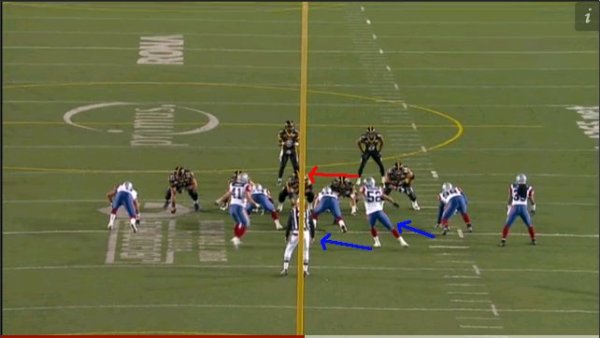
As this play begins you can see that Marcus Thigpen is lined up beside the quarterback in the shotgun formation. Even though this picture is pre-snap, you can tell that some of Montreal’s defenders are cheating over a bit because in this case (#52) linebacker Ramon Guzman is coming on a blitz, which would be a perfect call if the Ticats were running a draw play.
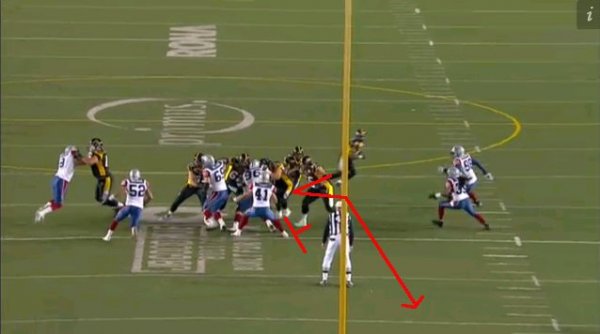
However, instead of a draw, Ticats Offensive Coordinator Mike Gibson calls a counter and it’s timed perfectly. The flow of the defence is all to the left and the only players left in position to tackle Thigpen are much too far away. Thigpen is left with a gaping hole and all he has to do is run through it. Notice how (#66) left tackle Alex Gauthier seals the inside of the hole and makes it impossible for any real pursuit.

Thigpen uses his acceleration to burst through the line and has nothing but daylight ahead of him.
Worth noting here is how Kevin Glenn completes the play by finishing his fake and completing the rollout.
This does two things – a) Leaves a little doubt in the mind of the defenders as to who really has the ball and b) makes sure that when the coach calls a play-action counter, it looks the same as the actual counter and will leave the defence guessing. If you watch Ticats games regularly you will know that play-action out of the shotgun is a staple of the offence and allows Glenn to attack the edges of the defence with quick throws to Dave Stala or Maurice Mann.
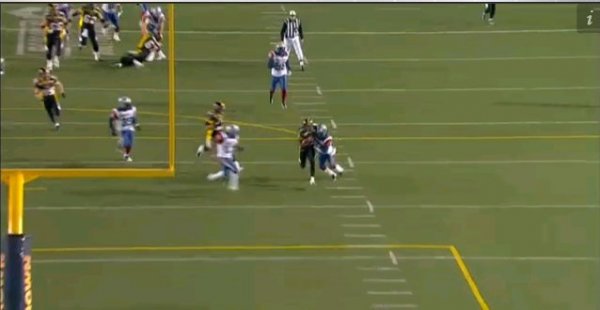
Thigpen uses his speed to accelerate up the field and almost splits the last two defenders for the touchdown. None the less, this play results in a 31-yard gain and really opens up other options for the team’s play-calling.
This play is an example of the way that coaches set up teams by calling plays in a certain rhythm.
Basically, the counter is set up by a draw or a stretch run that attacks the edge of the defence. The counter tricks the defence into over-pursuing and then cutting the run back against the grain. Both plays set up the play-action and really takes away from the defence’s aggression. Either they get caught flat-footed and waiting for the play to unfold or they guess and attack the wrong area, either way the offence has done their job.
